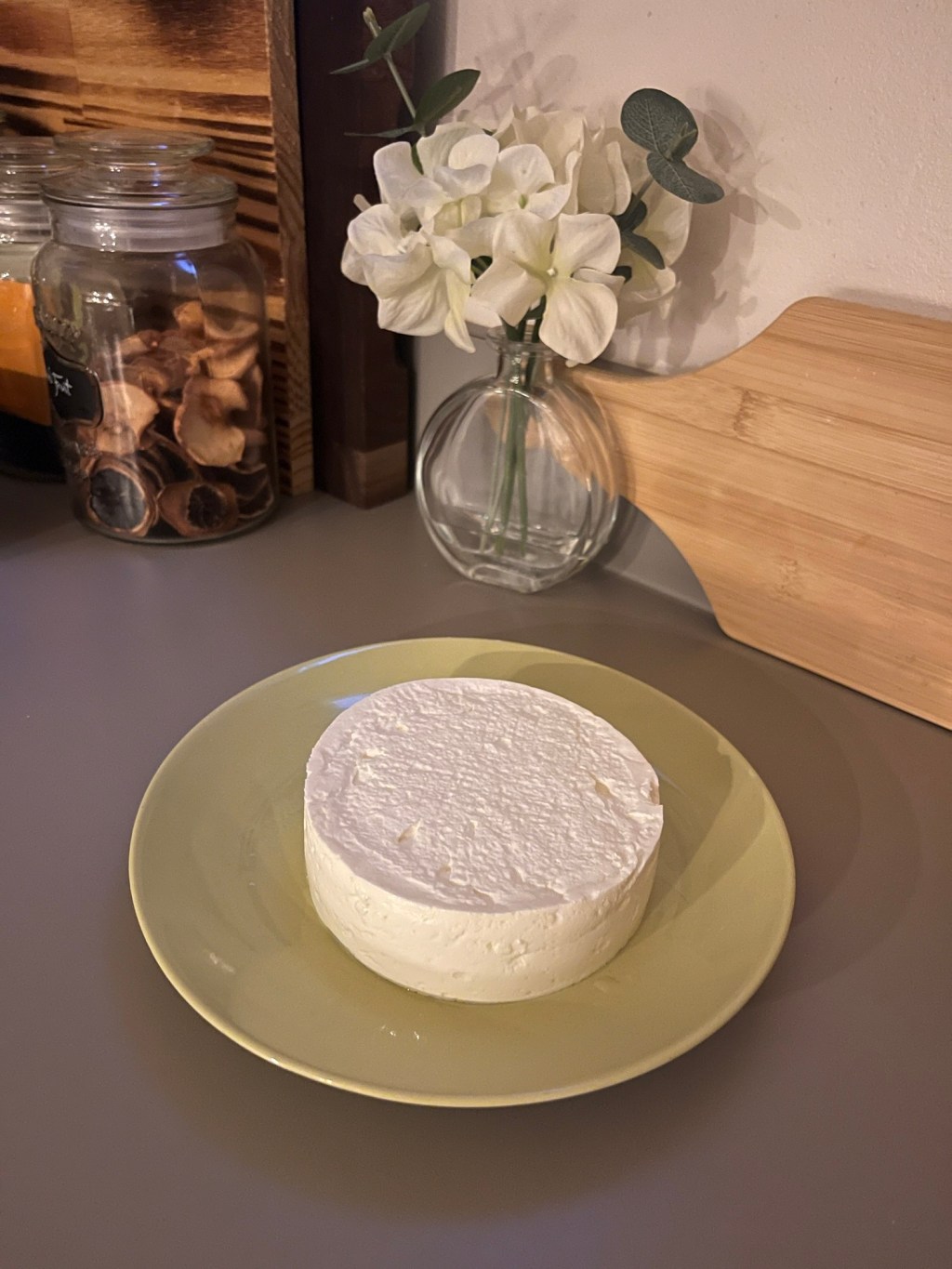
There are some recipes that live far beyond the kitchen — like this homemade Portuguese cream cheese, which carries memories, traditions, and the feeling of home in every bite.
Passed down from my Vavó (grandmother) to my mom, and now to me, it’s something I’ve grown up making year after year. While we enjoy it throughout the seasons, it holds a special place during Lent, especially Holy Week — a time when we slow down, eat simply, and gather around meat-free meals that feel both nourishing and meaningful.
I can still remember watching my mom make it while I was growing up: the gentle warming of milk, the quiet wait as it sets, the careful wrapping and flipping over the next couple of days. It’s not just about the end result (though spreading it on fresh bread is the best part), but about the ritual itself — the anticipation and the connection it brings.
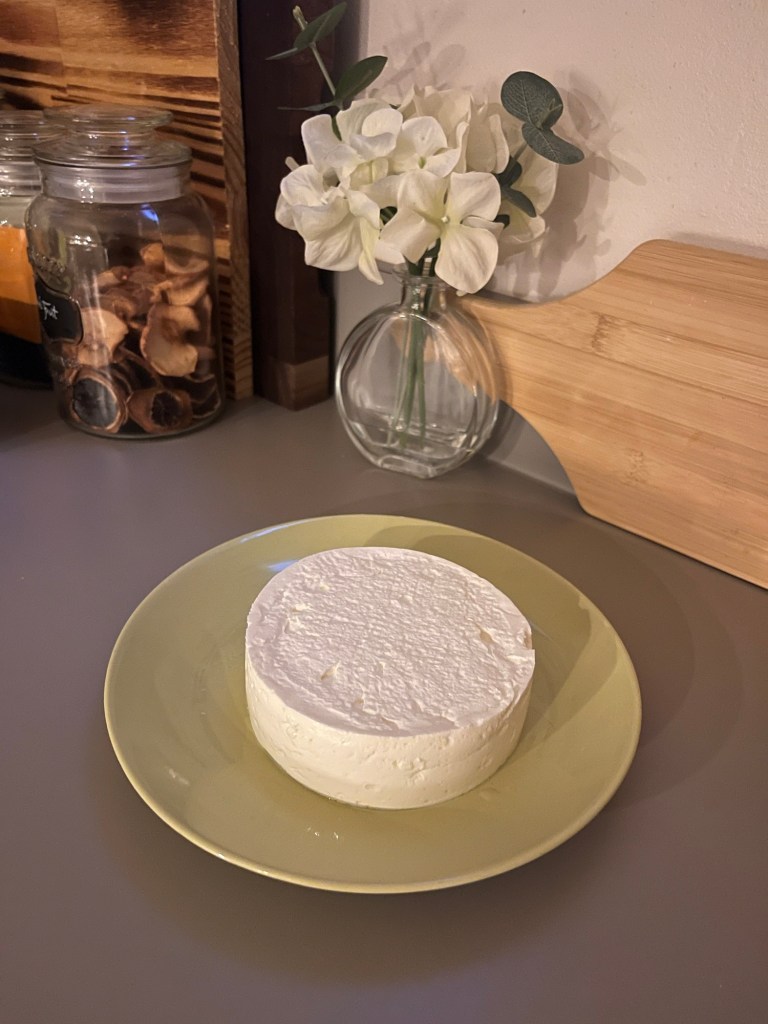
Made with just a few simple ingredients, this cream cheese is soft, creamy, and incredibly satisfying. It’s so good you can literally eat it with a spoon! But more than that, it’s a reminder that the best recipes aren’t always the most complicated — they’re the ones rooted in tradition, shared across generations, and made with love.
Homemade Cream Cheese
Ingredients:
2 L whole milk
500 ml 18% table cream
2–3 tsp salt (or to taste)
6 rennet tablets
Directions:
1. Heat the mixture
In a large pot, combine milk, table cream, salt, and crushed rennet tablets. Stir well until everything is fully dissolved. Heat gently until lukewarm (not hot).
2. Let it set
Remove from heat, cover, and let sit undisturbed for 2 hours until it solidifies.
3. Transfer to molds
Line cheese molds with paper towel (this helps keep the cheese lighter and creamier). You can also use cheesecloth, but it will result in a firmer, thicker cheese. Spoon the curds evenly into molds.
4. First drain
Let sit at room temperature for 4–6 hours. Carefully drain any liquid that collects.
5. Flip & refrigerate
Remove paper towel, place a plate on top, and flip carefully. Re-wrap each cheese with fresh paper towel and refrigerate.
6. Continue draining
For the next 2 days, flip the cheese and replace paper towels 1–2 times daily to help it firm up.
Remove from molds and enjoy on fresh bread like papo secos (Portuguese buns), sourdough, or as part of any meal.






 Sandy’s Kitchen